
A new product takes 6 to 18 months from idea to shelf. During that time, formulation briefs live in email, artwork versions multiply across shared drives, and supplier quotes arrive in five different formats. When someone asks "where are we with the new range?", the answer takes three phone calls.
Most food and drink brands at the £20m-£150m mark don't need a six-figure PLM system. They need a structured workflow, standardised templates, and basic automations connecting the stages together. This guide walks through how to build exactly that, using tools your team probably already pays for.
The Bottom Line - Most 50-200 SKU brands can run NPD effectively without a PLM (saving £20,000-£100,000+/year) - The real value is standardised templates, not the tool itself - Only 18% of CPG companies have scaled digital workflows beyond pilots (BCG, 2026) - Basic stage-gate automation takes 2-4 weeks to implement vs 3-6 months for a PLM
Why Does NPD Become Chaotic at Scale?
According to L.E.K. Consulting (April 2026), 45% of brand owners have already implemented smart, connected packaging, with adoption expected to reach 88% by 2028. Product complexity is growing faster than most teams' processes can keep up with.
The pattern we see most often: a brand launches successfully with 30-50 SKUs, processes are informal but manageable, and the NPD team knows where everything is because they remember it. Then the range grows. New people join. Suddenly the same informal process creates gaps.
Where Things Break Down
Formulation briefs get updated via email reply chains. Nobody's sure which version is current. Artwork goes through 4 rounds of amends and the final PDF lives in someone's Downloads folder. Technical specifications, particularly allergen declarations, get copied between documents manually.
Regulatory checks happen at the last minute because nobody triggered them earlier. Supplier costings arrive as email attachments with inconsistent formats. The NPD manager becomes the single point of failure, because they're the only person who knows the full picture.
In projects we've worked on with brands at this scale, the average NPD process involves 7-12 distinct handoffs between people or departments. Each handoff without a formal trigger is a point where work stalls silently.
Citation capsule: According to L.E.K. Consulting (April 2026), 45% of brand owners have implemented smart connected packaging, with adoption expected to reach 88% by 2028, indicating a rapid growth in product complexity that demands structured NPD workflows.
What Does a PLM Do (and Do You Actually Need One)?
BCG (June 2026) reports that only 18% of CPG companies have successfully scaled AI and digital tools, with 75% stuck in perpetual pilots. Most brands at the £20m-£150m mark haven't digitised NPD at all, let alone with a full PLM.
PLM systems like Specright, Salsify, and 1WorldSync manage the entire product lifecycle: formulation, specifications, packaging, regulatory compliance, and change control. They're built for enterprises with complex requirements.
The Cost-Benefit Reality
A PLM typically costs £20,000-£100,000+ per year in licensing. Implementation takes 3-6 months with dedicated project management. You'll need internal champions, data migration, and training across multiple departments.
Worth it if you're managing 500+ SKUs across multiple markets with different regulatory requirements. Overkill if you're a 50-200 SKU brand launching 10-20 new products per year in the UK market.
The gap between "everything in email" and "full PLM" is enormous. Most brands need something in that gap. Not a £80k system. A structured workflow with the right templates and triggers.
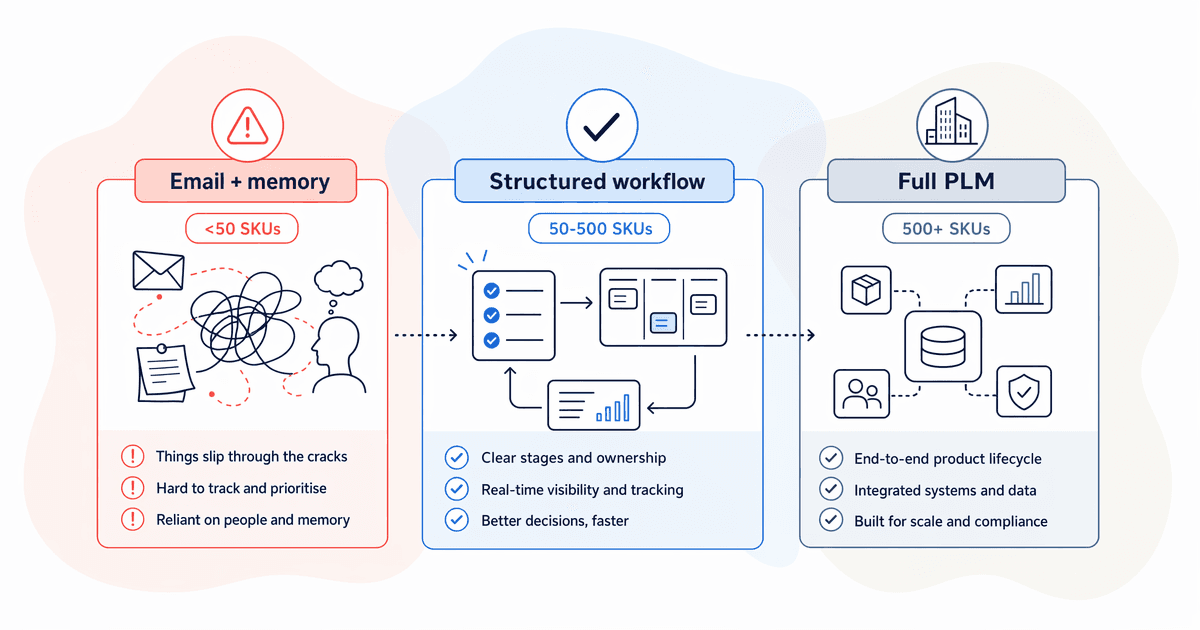
practical guide to AI for FMCG
Citation capsule: BCG (June 2026) found only 18% of CPG companies have scaled digital tools beyond pilots, with 75% stuck in perpetual pilot programmes, suggesting most food and drink brands still rely on informal NPD processes.
How Do You Define Your NPD Stages?
Every brand's NPD process is slightly different, but a typical food or drink product moves through 6-8 stages before reaching the shelf. The first step is naming these stages explicitly, because you can't automate what you haven't defined.
A Typical Stage-Gate Structure
Map your actual process. Don't copy a textbook. But here's a starting framework:
- Concept - idea approved, initial brief written, business case sketched
- Formulation - recipe development, bench trials, ingredient sourcing
- Costing - bill of materials, supplier quotes, margin calculation
- Technical - spec sheets, allergens, nutritional analysis, shelf life testing
- Design - artwork briefing, packaging design, print-ready files
- Production trial - factory trial, quality sign-off, process parameters confirmed
- Launch - listings confirmed, first production run, distribution
Who Owns Each Stage?
Name a single owner per stage. Not "the NPD team." A person. When the formulation stage is complete, who decides it's ready to move to costing? That person is the stage gate owner.
We've found that the biggest friction in NPD isn't the tools. It's unclear ownership at transitions. Two departments both think the other one is responsible for triggering the technical review. Work sits for two weeks.
Write it down. A simple RACI matrix for your NPD stages will expose gaps you've been working around informally for years.
How Do You Build the Workflow in Tools You Already Have?
You don't need new software. The pattern we see most often: brands already pay for project management or productivity tools that can handle stage-gate workflows. The issue isn't capability, it's configuration.
Option 1: Monday.com, Asana, or Trello (£20-£100/month)
These tools handle stage-gate workflows well. Create a board where each NPD project is an item, columns represent your stages, and automations trigger notifications at transitions.
Best for: teams who think visually, want drag-and-drop simplicity, and need minimal training. Trello is simplest. Monday.com offers more automation. Asana sits in the middle.
Option 2: Notion or Coda (£10-£50/month)
More flexible. Build linked databases connecting SKUs to specifications to suppliers to timelines. One database for products, one for suppliers, one for specifications, all related.
Best for: teams who want a single source of truth that connects product data with project timelines. Steeper learning curve, but more capable as your needs grow.
Option 3: SharePoint + Power Automate (included in Microsoft 365)
If your team already lives in Outlook, Teams, and SharePoint, don't introduce another tool. SharePoint lists can act as stage-gate trackers. Power Automate handles notifications and escalations.
Best for: Microsoft-native teams who won't adopt another platform. Lower friction, familiar interface, no additional licensing cost.
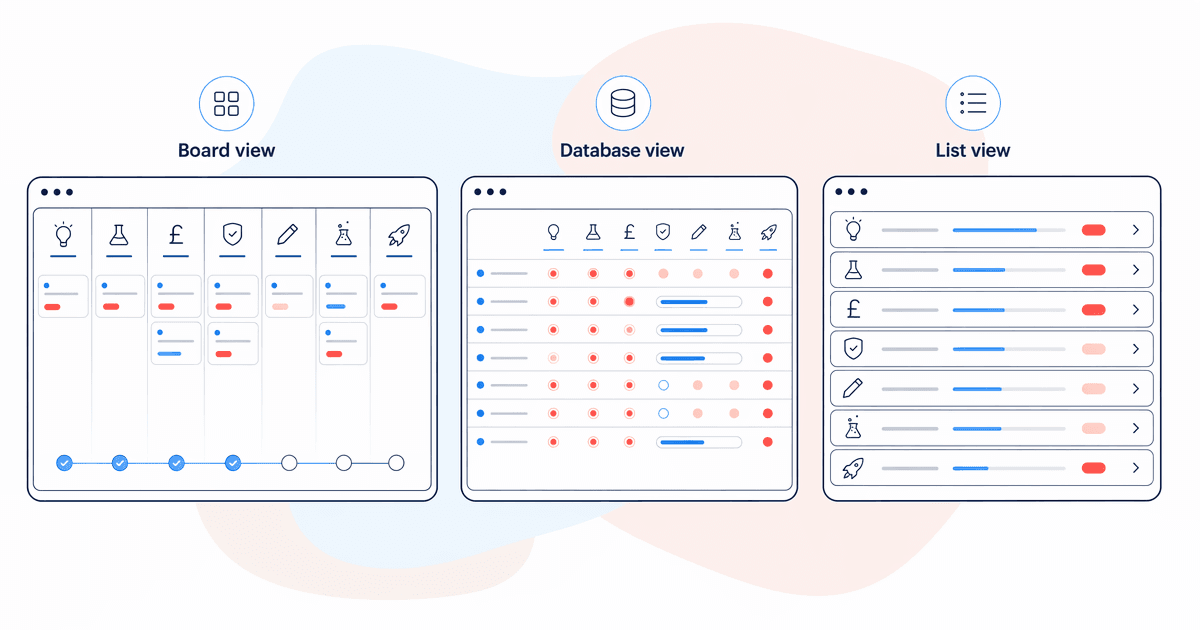
The tool choice matters less than most people think. We've seen equally effective NPD workflows in Trello (free tier) and Monday.com (£100/month). The differentiator is always template discipline and automation rules, not the platform.
Why Are Standardised Templates the Real Value?
The tool is just the container. Templates are what actually reduce errors and save time. Every new product starting from a blank page means inconsistency, missed fields, and rework when downstream teams receive incomplete information.
Essential NPD Templates
Build these four templates and enforce their use for every new product:
NPD Brief Template - Product name, target market, positioning, target RRP, margin requirement, key claims, launch date, retail customer targets. One page. Non-negotiable starting point.
Formulation Cost Template - Ingredients list, supplier per-unit costs, batch size assumptions, packaging component costs, total COGS, target margin. Standard format means finance can review without translation.
Technical Specification Template - Ingredients declaration, allergen matrix (the 14 allergens, every time), nutritional information per 100g and per serving, shelf life, storage conditions, packaging materials. Follows your retailer's requirements.
Artwork Brief Template - Pack format, mandatory copy elements, claims requiring substantiation, barcode requirements, photography brief, colour references, legal copy. Designers get everything in one document.
Eliminating "I Used Last Year's Format"
When templates live inside your workflow tool, attached to the stage gate, people can't bypass them. The formulation stage literally cannot be marked complete without the cost template attached. This isn't bureaucracy. It's preventing the £15,000 artwork reprint because someone forgot the new allergen categories.
building a product data master
Citation capsule: With 45% of brand owners already using connected packaging (L.E.K. Consulting, April 2026) and product complexity increasing, standardised NPD templates prevent downstream errors in technical specifications, allergen declarations, and artwork that compound as SKU counts grow.
What Automations Should You Set Up First?
Start with minimum viable automation. Three rules that eliminate 80% of the "why didn't anyone tell me?" moments in NPD.
The Three Essential Triggers
1. Stage completion notification. When the formulation owner marks their stage complete, the costing owner gets notified immediately. No waiting for someone to remember to send an email. Every tool listed above supports this with zero coding.
2. Deadline escalation. When a stage deadline passes by 48 hours without completion, the NPD manager (and the stage owner's line manager) gets an alert. Quiet stalls become visible.
3. Downstream triggering. When technical approval is granted, automatically create the artwork brief task and assign it. When costing is signed off, trigger the production trial booking. One stage's output is the next stage's input.
Building More Over Time
Once the basics work, add:
- Weekly digest emails summarising all active NPD projects and their current stage
- Automatic document naming conventions applied when files are uploaded
- Supplier notification when a new costing request is created
- Dashboard showing pipeline: how many products at each stage right now
But don't build all of this on day one. Get the three core triggers working. Let people trust the system. Then add complexity.
How Should NPD Data Feed Your Master Product Data?
The NPD workflow shouldn't exist in isolation. When a new product is approved for launch, its specification data needs to flow into whatever system holds your live product data. Re-entering ingredients, allergens, nutritionals, shelf life, and storage conditions manually is how errors enter your master data.
The Handoff Point
Define a clear moment: "this product is now live." At that point, the technical specification from your NPD workflow becomes the source record in your product data master. Ideally this is automated, or at minimum it's a structured export/import rather than manual re-keying.
We've seen brands where the NPD team maintains specs in one system, the commercial team re-enters data into retailer portals, and the quality team keeps a separate version for audits. Three versions of truth. Allergen discrepancies between them. That's a recall risk, not just an efficiency problem.
Practical Connection Methods
- Notion/Coda to spreadsheet export: structured CSV matching your master data format
- Monday.com to ERP: API integrations or Zapier/Make connectors
- SharePoint to internal systems: Power Automate flows pushing approved data downstream
The goal: data entered once during NPD, validated once during technical approval, then flowing automatically into live systems.
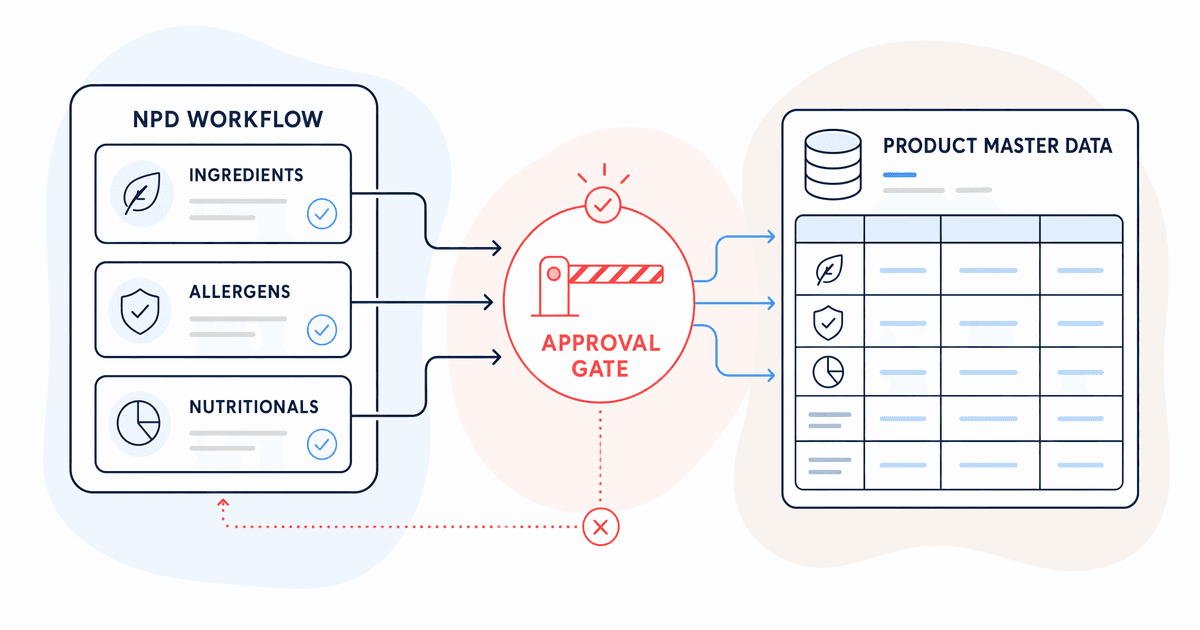
Citation capsule: With only 18% of CPG companies having scaled digital tools beyond pilots (BCG, June 2026), connecting NPD workflow outputs to master product data remains a gap for most food and drink brands, creating manual re-entry errors in allergen and specification records.
When Should You Upgrade to a Full PLM?
A structured workflow in Monday.com or Notion handles NPD well for most brands at the 50-200 SKU level. But specific signals indicate you've outgrown it.
Clear Upgrade Signals
Multiple regulatory markets. Selling in the UK, EU, and Middle East means different allergen declarations, different labelling requirements, and different approval workflows per market for the same product. Managing variants across three regulatory frameworks in Notion becomes fragile.
500+ active SKUs. At this volume, the relationship management between products, specifications, suppliers, and packaging components becomes genuinely complex. Linked databases start creaking.
Customer-specific variants. If you're producing own-label alongside branded, with retailer-specific specs, different artwork per customer, and separate technical approvals, the branching logic exceeds what simple tools handle cleanly.
Audit trail requirements. BRC/IFS audits increasingly demand version-controlled change history. Who changed that allergen declaration, when, and why? Project management tools track task completion, not specification change history.
The Transition Path
Don't jump from informal to PLM directly. The staged approach works:
- Map and name your NPD stages (this post)
- Build workflow with templates and triggers
- Run it for 6-12 months, identify gaps
- Evaluate PLM with clear requirements based on real pain points
Brands that skip steps 1-3 and buy a PLM often end up with an expensive tool that mirrors their existing chaos rather than fixing it.
Frequently Asked Questions
Can I automate NPD workflows without a PLM system?
Yes. Tools like Monday.com, Notion, or SharePoint with Power Automate handle stage-gate NPD workflows effectively for brands managing 50-200 SKUs. A PLM becomes worthwhile above 500 active SKUs or when managing products across multiple regulatory markets. Most brands at the £20m-£150m level don't need one yet.
How long does NPD workflow automation take to implement?
A basic stage-gate workflow takes 2-4 weeks to configure and populate with templates. Compare that with 3-6 months for a full PLM implementation. The time investment is in mapping your stages and building templates, not tool setup. BCG (2026) notes 75% of CPG digital projects stall in pilots because they skip this groundwork.
What's the single highest-value automation for NPD teams?
Stage-completion notifications. When one stage owner marks work complete, the next stage owner is notified automatically. This eliminates the most common NPD delay: work sitting idle because nobody told the next person it was their turn. Takes five minutes to configure in any project management tool.
Getting Started This Week
You don't need budget approval, a software evaluation, or a six-month project plan. You need a whiteboard session, a decision on tools, and the discipline to enforce templates.
Start here: gather your NPD team for 90 minutes. Map your actual stages on a whiteboard. Name the owner of each stage. Identify the three handoffs that break most often. Build those three triggers in whatever tool you already use.
That's your minimum viable NPD workflow. It won't be perfect. But it'll be better than email chains and memory, which is where 75% of CPG companies are still stuck according to BCG's June 2026 research.