
Limited visibility
Hard to see the full picture across demand, inventory, orders and suppliers.
DEPARTMENT
We help FMCG supply chain teams improve visibility, reduce manual admin and make faster decisions across planning, logistics and supplier operations.
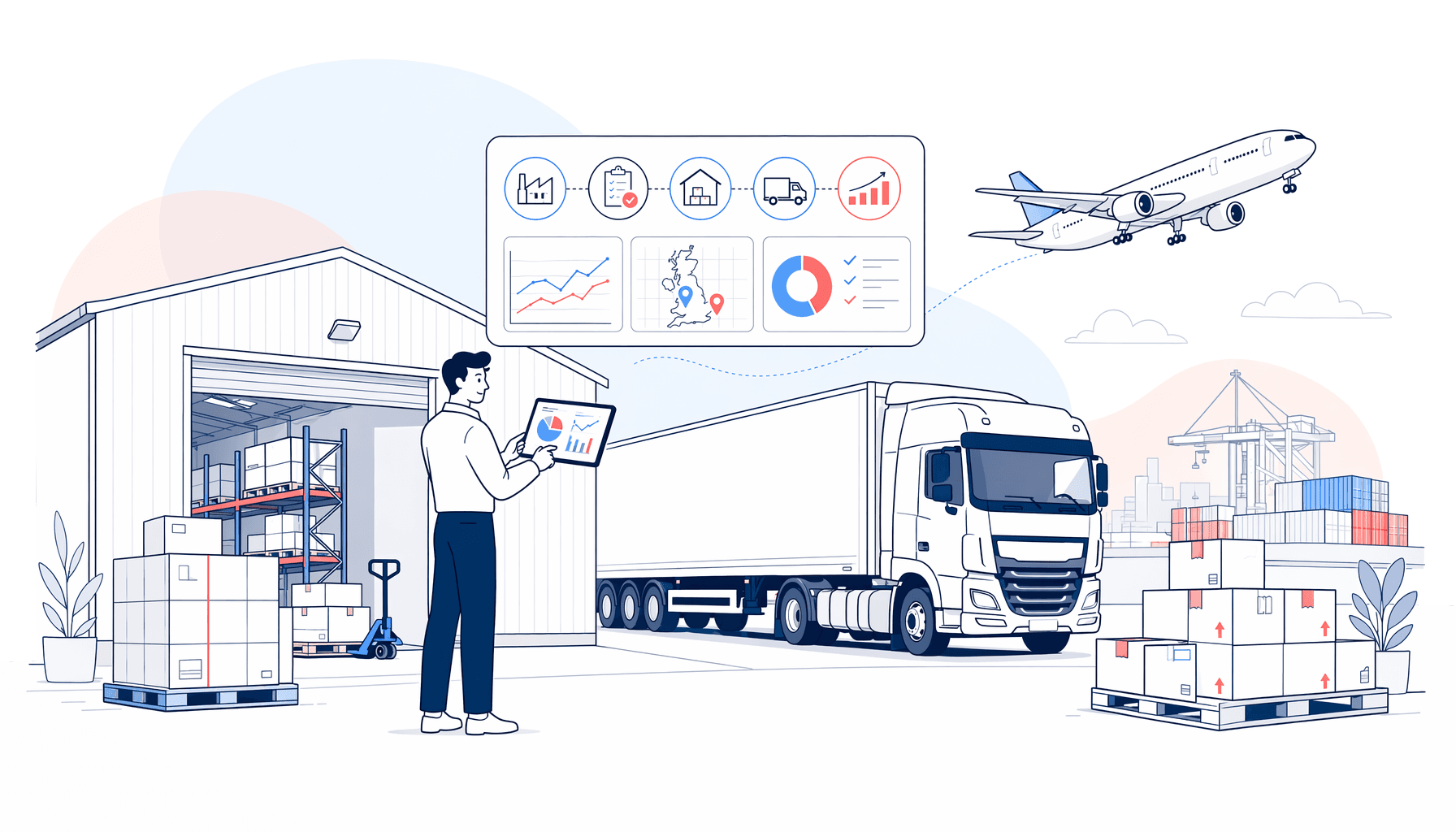
Hard to see the full picture across demand, inventory, orders and suppliers.

Teams spend too much time updating spreadsheets and chasing information.

Issues are only spotted late, causing delays and impacting service levels.

Demand is hard to predict accurately with siloed data and manual processes.

Important data sits in different tools that do not talk to each other.
Practical AI, automation and data solutions built around your supply chain workflows.

Improve forecast accuracy with AI-assisted insights and better data visibility.

Capture, track and summarise supplier updates without manual chasing.

Identify stock issues early and alert the right people to take action.

Create automated reports across shipments, delays and delivery performance.

Answer planning questions and summarise key operational information.

Extract, validate and route orders and documents without manual re-keying.

Connect ERP, WMS, TMS and other tools so data flows where it should.

Live dashboards for performance, inventory, service levels and improvement tracking.
A few practical examples of how manual supply chain work can become clearer, faster and easier to manage.

Before
Teams chase suppliers by email, copy updates into spreadsheets and manually flag delays.
After
Supplier replies are summarised, missing updates are flagged and key changes are routed to the right person.
Outcome
Less chasing
Clearer updates
Faster escalation

Before
Stock issues are found during manual checks or when another team reports a problem.
After
Data feeds and rules highlight exceptions earlier and create tasks or alerts for the right team.
Outcome
Earlier action
Better visibility
Fewer surprises

Before
Managers export data, clean spreadsheets and manually prepare commentary before meetings.
After
A reporting workflow prepares the pack, highlights changes and drafts a summary for review.
Outcome
Faster reporting
Consistent management information
Clearer decisions

We understand your current processes, systems, data and pain points.

We prioritise use cases that are practical, valuable and fast to implement.

We design and implement a focused solution for one key workflow.

We expand the solution across your team and keep improving over time.
Yes. We design solutions around the systems you already use where possible, including ERP, WMS, TMS, spreadsheets, reporting tools and shared documents.
Not always. We can start by mapping the current process and identifying where data quality matters most. Some useful pilots can begin with imperfect data.
It depends on the workflow and integrations involved. Many projects can start with a focused pilot before expanding into a wider rollout.
Yes. Starting with one workflow is often the best way to prove value, reduce risk and learn what works for your team.
No. The aim is to reduce manual work, improve visibility and support better decisions, while keeping people in control of important actions.
Let's talk about your challenges and how AI can help your team perform at its best.